If you live in Delray Beach, you know the sun, salt, and sudden summer downpours can make landscaping a challenge. You want a yard that looks great, uses less water, and holds up to coastal conditions without constant upkeep. In this guide, you’ll learn how to choose native, coastal‑tolerant plants, build healthier sandy soils, set up app‑controlled smart irrigation, and reduce runoff to protect nearby waterways and your budget. Let’s dive in.
Why Delray yards need a coastal plan
Delray Beach sits in coastal South Florida with a subtropical climate and a pronounced wet season from June through September. Intense storms can bring heavy rain in short bursts, while the drier season arrives in late fall and winter. That means your landscape needs to handle both quick drainage and periodic drought.
Near the coast, you also face salt spray, saline groundwater in some areas, strong winds, and sandy soils with low organic matter. Choosing salt‑ and wind‑tolerant plants and dialing in efficient irrigation helps your yard thrive while limiting nutrient runoff into sensitive coastal waters.
Local watering rules and rebate programs can change. Check City of Delray Beach Utilities, Palm Beach County, and the South Florida Water Management District for current schedules, restrictions, and incentives. UF/IFAS Extension and the Florida Native Plant Society offer reliable guidance on plant selection, soils, and fertilizer best practices.
Choose native, coastal‑tolerant plants
Native and well‑adapted plants are your best bet in Delray. They typically need less supplemental water once established, stand up to local pests and wind, and support wildlife.
Follow these principles:
- Right plant, right place. Match salt and water tolerance to each micro‑site.
- Use structural diversity. Mix canopy trees, understory shrubs, perennials, and native grasses.
- Prioritize low‑maintenance species. Reduce fertilizer needs and long‑term costs.
Trees and large shrubs
- Sea grape (Coccoloba uvifera)
- Gumbo limbo (Bursera simaruba)
- Sabal palm (Sabal palmetto)
- Simpson’s stopper (Myrcianthes fragrans)
- Buttonwood for coastal sites (Conocarpus erectus)
- Red or black mangrove for tidal or swale edges, where appropriate
Shrubs and understory
- Firebush (Hamelia patens)
- Coontie, a native cycad (Zamia integrifolia)
- Wild coffee (Psychotria nervosa)
Grasses and groundcovers
- Sea oats for dune stabilization (Uniola paniculata)
- Muhly grass (Muhlenbergia capillaris)
- Beach sunflower (Helianthus debilis subsp. tardiflorus)
Accent xeric plants
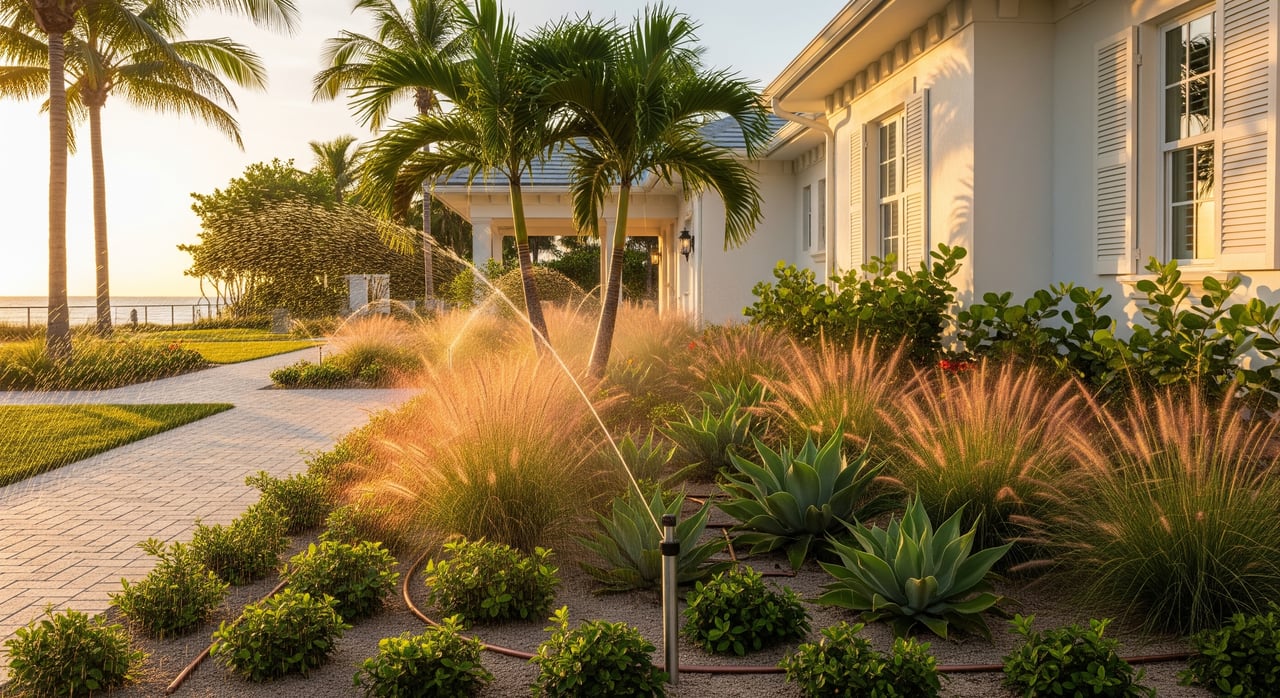
Use agave and other succulents sparingly and in scale with your home’s design. Choose locally native genotypes when possible and avoid invasive ornamentals that may spread into coastal habitats.
Build better soil in sandy sites
Coastal sands drain fast and hold little organic matter. Your goals are to boost water‑holding capacity in planting beds, improve nutrient availability, and protect roots from heat.
- Blend compost into planting holes and beds. Moderate additions improve moisture and nutrients without hindering drainage.
- Mulch beds with 2 to 3 inches. Keep mulch a few inches from trunks and stems to prevent rot.
- Avoid importing heavy clay or generic “topsoil.” Mixing quality compost with native sand is usually sufficient for beds.
- Rethink turf. If you need lawn, choose coastal‑appropriate turf and keep it on its own irrigation zone. Consider reducing lawn area and expanding native beds to cut water use.
Fertilizer best practices
Follow Florida‑specific guidelines. Use slow‑release nitrogen, apply only as needed, and avoid fertilizing before heavy rain. Leave buffers near water features, collect any granules from hard surfaces, and rely on soil or tissue testing if problems persist. UF/IFAS and Palm Beach County UF/IFAS Extension publish up‑to‑date recommendations for coastal landscapes.
Smart irrigation that works in Delray
Smart irrigation helps you avoid overwatering, save money, and reduce runoff. Modern systems can adjust to seasonal needs and recent weather or respond to actual soil moisture at root depth.
Choose the right controller
- Weather‑based controllers. Adjust schedules using local weather and evapotranspiration data.
- Soil‑moisture‑based controllers. Water only when sensors indicate the root zone needs it.
- Hybrid systems. Combine weather data, soil sensors, and app control for flexibility.
Look for EPA WaterSense labeled controllers. These products meet independent performance criteria and support efficient scheduling.
Distribute water efficiently
- Use drip or micro‑irrigation in beds and around shrubs. This minimizes evaporation and wind drift.
- For turf, select low‑angle rotors or matched precipitation spray heads.
- Add pressure regulation and filtration for consistent output and fewer clogs.
Hydrozoning and scheduling
- Group plants by water needs and place each group on its own zone. Keep turf separate from trees and shrubs.
- Use seasonal adjustment features and local weather or soil moisture feedback to tune run times.
- Avoid watering during mid‑day. Many jurisdictions limit watering between late morning and afternoon hours.
Maintenance and app control
- Check quarterly for leaks, clogged emitters, and misaligned heads.
- Test and recalibrate sensors annually. Replace batteries and confirm Wi‑Fi connectivity for app‑based systems.
Smart controllers and efficient distribution can substantially reduce outdoor water use compared with conventional systems. Some utilities and regional agencies offer rebates for WaterSense controllers or nozzle upgrades. Confirm current programs with City of Delray Beach Utilities, Palm Beach County, or the South Florida Water Management District.
Reduce runoff and protect water quality
Thoughtful design keeps stormwater on site and limits nutrient runoff to coastal waters.
- Use permeable surfaces. Consider permeable pavers, gravel paths, and mulched beds instead of continuous concrete.
- Install rain gardens and bioswales. Capture roof and driveway runoff in planted depressions. Choose native species that tolerate periodic wetness in low spots.
- Redirect downspouts. Send roof water into landscaped areas or approved rain barrels instead of directly to the street.
- Match application rates to infiltration. On slopes or compacted areas, use cycle‑and‑soak scheduling to prevent runoff.
- Add rain sensors and shutoffs. Prevent irrigation after rainfall and during storms.
Nutrient runoff basics
Maintain vegetated buffers next to drains and swales, keep fertilizers out of those buffers, and choose slow‑release formulations with minimal phosphorus unless a soil test calls for it. Sweep fertilizer off hardscapes and compost yard debris.
Quick plans for sellers and buyers
If you’re getting ready to sell
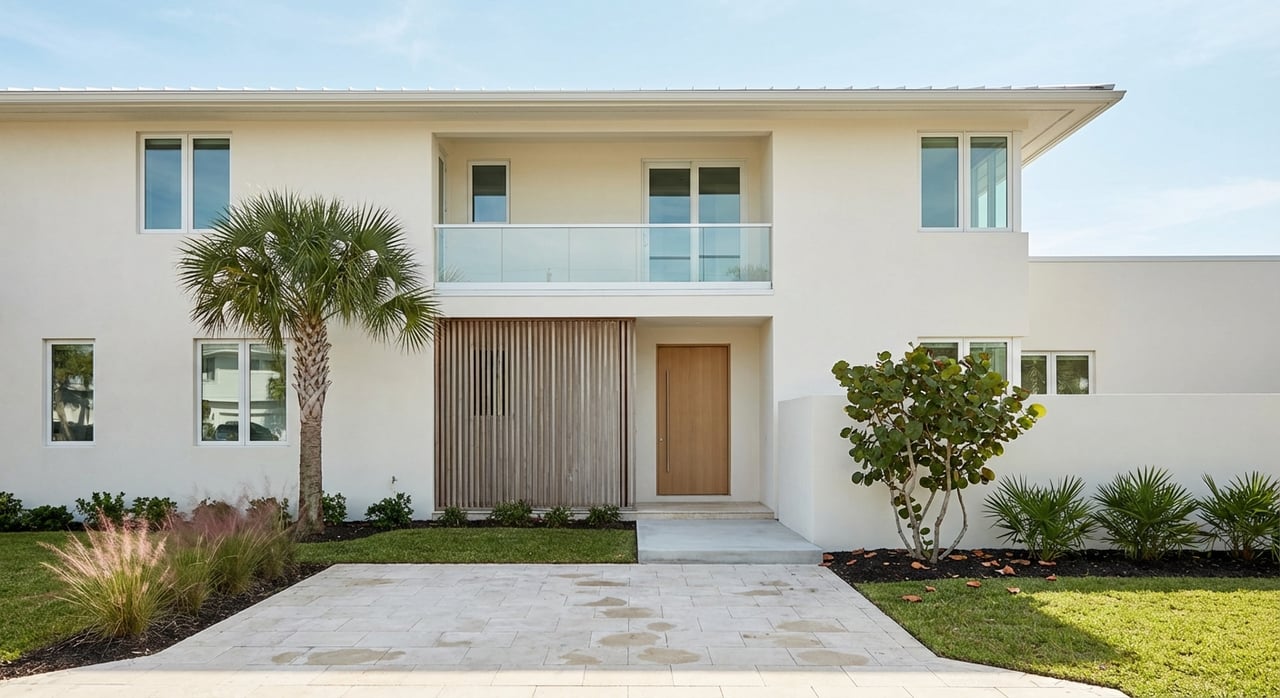
- Refresh curb appeal with tidy native beds, well‑defined edges, and a few specimen trees such as sea grape or sabal palm.
- Convert a portion of turf to native plantings or a rain garden to showcase low maintenance and lower water bills.
- Upgrade to a smart controller and drip where appropriate, then save receipts and warranties to share with buyers.
- Check irrigation coverage. Avoid overspray onto driveways or sidewalks and keep beds mulched and weeded.
If you’re buying and planning a low‑maintenance yard
- Map micro‑sites first. Note sun, shade, wind, salt exposure, and drainage patterns.
- Invest in a WaterSense labeled smart controller and use drip in planting beds. The upfront cost is often offset by lower water bills.
- Build soil health early with compost and mulch during the first 1 to 2 years.
- Ask about system age and components. Controllers, valves, and nozzles may be ready for replacement or a smart upgrade.
Getting started and staying compliant
Before you plant or program, check City of Delray Beach Utilities and Palm Beach County for current watering schedules and fertilizer rules, and confirm regional guidance or incentives with the South Florida Water Management District. For plant lists and site‑specific tips, consult UF/IFAS Extension’s Florida‑Friendly Landscaping resources and the Florida Native Plant Society.
If you want referrals for local irrigation pros or native plant designers, ask during your home prep or purchase planning. Smart, coastal‑ready landscaping helps your property show better, reduces ongoing costs, and supports healthier waterways.
Ready to tailor a landscape plan that pairs with your real estate goals in Delray Beach? Reach out to Unknown Company and get your instant home valuation to plan next steps with confidence.
FAQs
What native plants work best for Delray Beach near the coast?
- Sea grape, gumbo limbo, sabal palm, Simpson’s stopper, firebush, coontie, wild coffee, muhly grass, sea oats, and beach sunflower tolerate coastal conditions.
How do smart irrigation controllers save water in Delray Beach?
- Weather‑based or soil‑moisture controllers adjust watering to actual needs, helping avoid overwatering, reduce runoff, and lower outdoor water use.
What soil amendments help sandy coastal soils in Palm Beach County?
- Mix modest amounts of compost into beds, add 2 to 3 inches of mulch, and avoid importing heavy clay or generic topsoil that can hinder drainage.
How often should I water new native plants in Delray Beach?
- Water consistently during the first 1 to 2 growing seasons based on weather or soil moisture, then reduce frequency once plants are established.
Where can I check current irrigation rules and rebates in Delray Beach?
- Review City of Delray Beach Utilities, Palm Beach County, and South Florida Water Management District websites for watering schedules and any incentive programs.