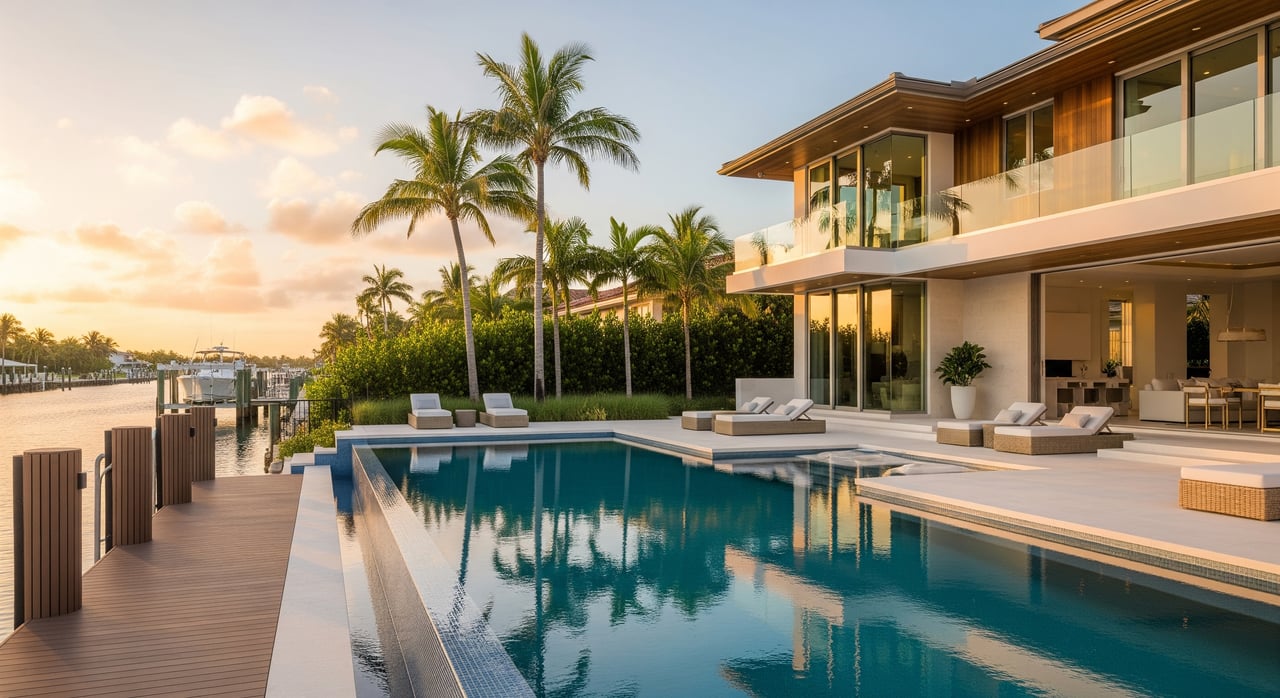
Waterfront vs. Near-Water in Delray Beach
December 18, 2025
December 18, 2025
Should you spring for true waterfront or choose a near-water home in Delray Beach? It is a big decision, and the costs, risks, and lifestyle differences are real. If you want clear definitions, practical research steps, and the right due diligence for our coastal market, you are in the right place. Below, you will learn how each option performs on access, insurance, maintenance, permitting, and long-term risk so you can buy or sell with confidence. Let’s dive in.
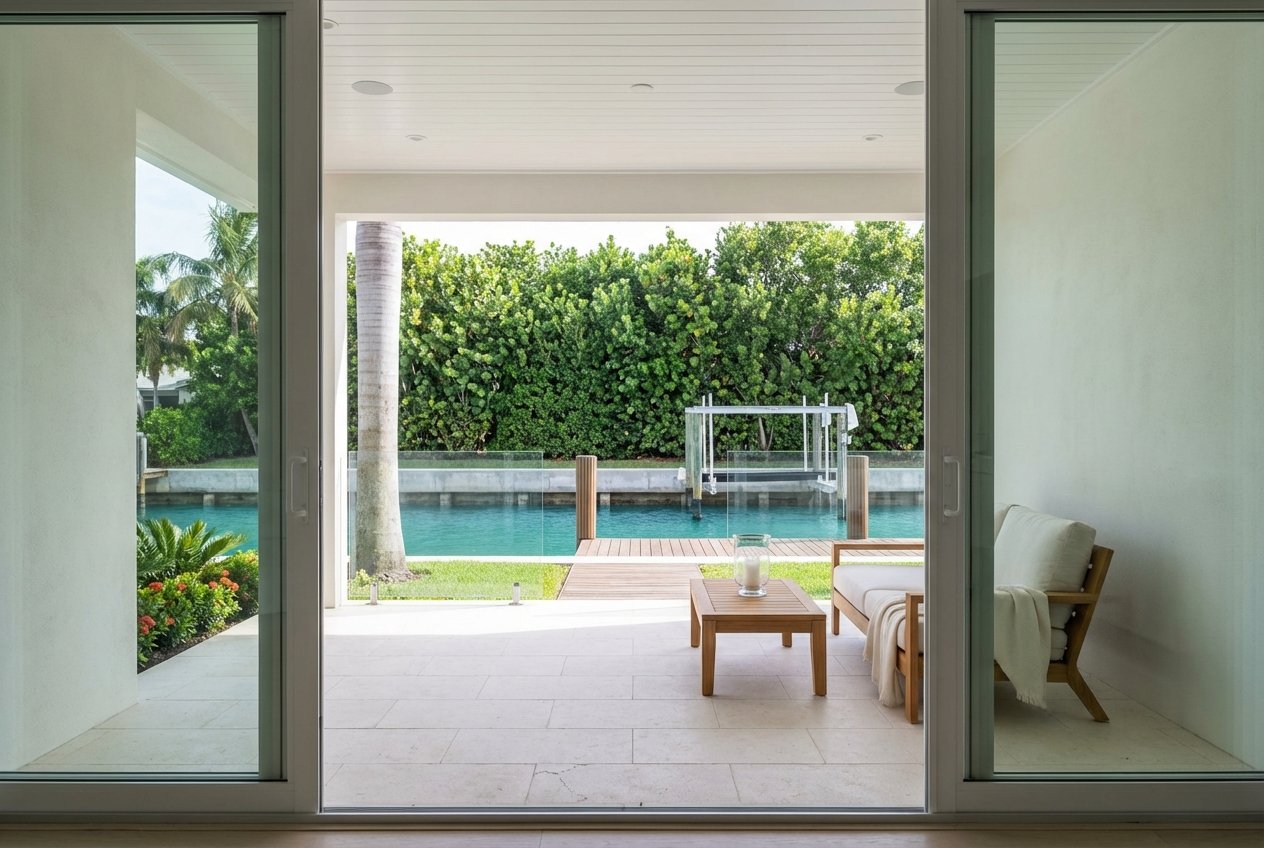
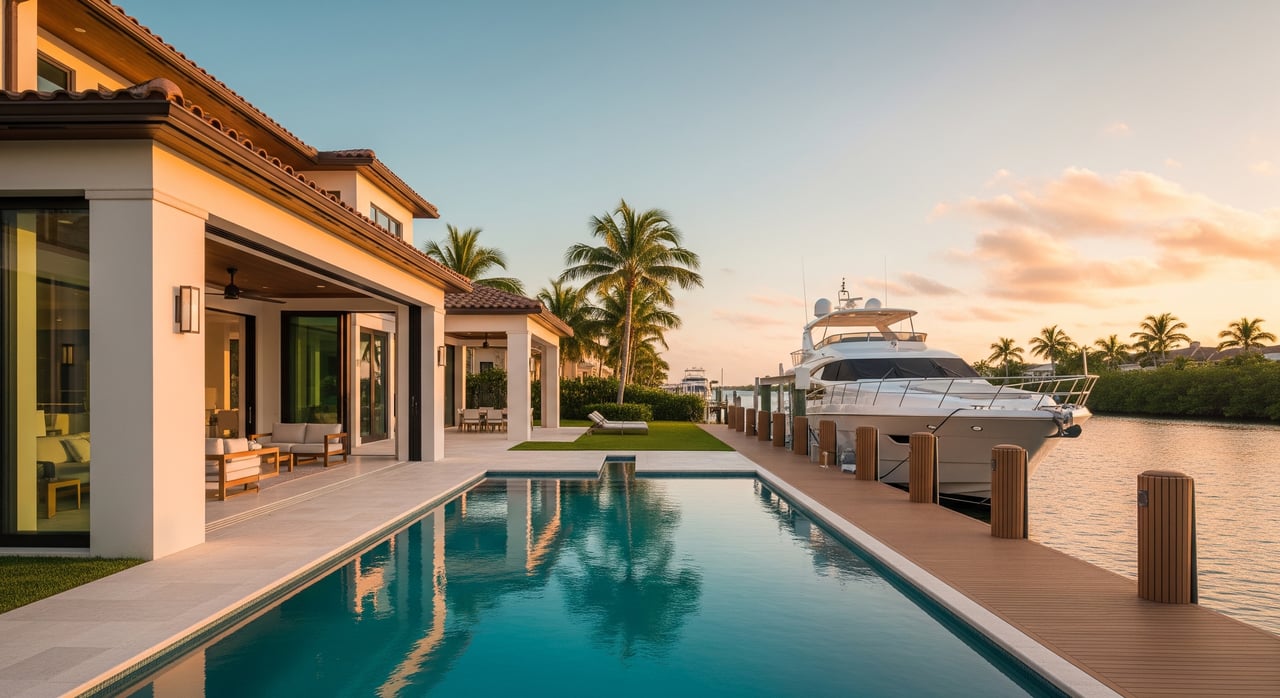
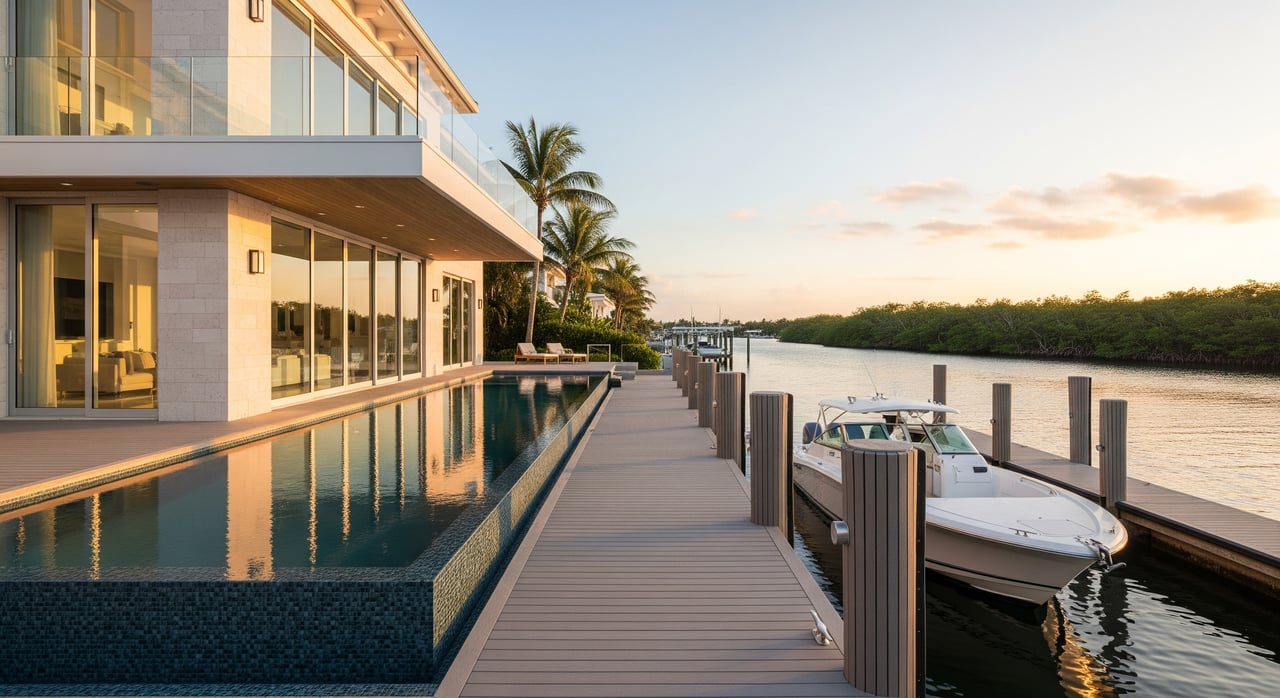
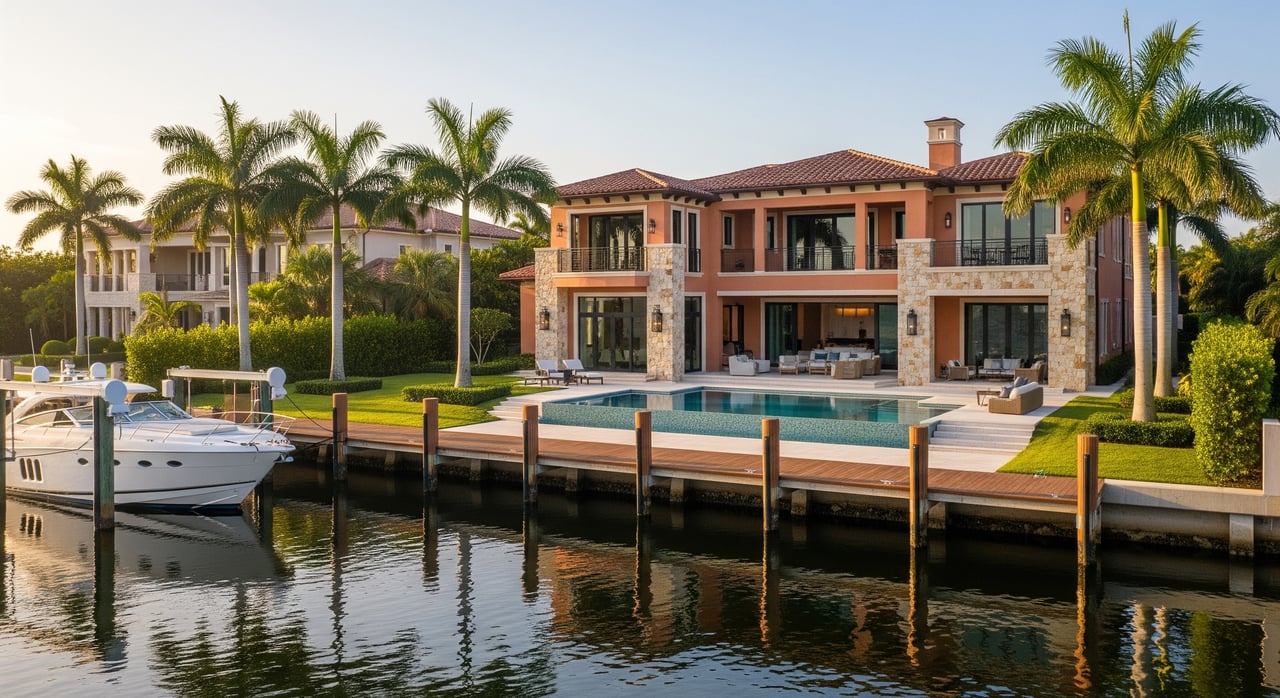
Waterfront means your property has direct, private access to a waterbody. In Delray Beach, that can be oceanfront, Intracoastal Waterway frontage, canal-front, or lakefront. True waterfront often includes riparian rights, potential for a private dock, and water immediately adjacent to the lot.
Waterfront types vary by lifestyle and boating needs. Oceanfront brings beach and Atlantic views. Intracoastal and canal-front locations often provide deep-water access or smaller private docks, depending on canal depth and bridge clearances. Lake or pond-front homes offer water views with generally lower salt exposure.
Near-water or water-view homes sit within a short walk of the beach, Intracoastal, or a canal, or have a visible water view without direct frontage. You can enjoy the scenery and coastal convenience, but you do not have private docking or direct shoreline access. Some communities provide shared amenities, like a marina or beach path, which can deliver much of the lifestyle at a lower cost.
FEMA Flood Insurance Rate Maps classify risk into zones like VE, AE, and X. VE zones indicate the highest coastal flood and wave action risk. AE zones are within the floodplain with specified base flood elevations. Lenders typically require flood insurance if a structure’s lowest floor is in a Special Flood Hazard Area.
You should verify a property’s FEMA designation using the official FEMA Flood Map Service Center. For many waterfront properties, an Elevation Certificate is essential for underwriting. Review it early, along with any past flood or insurance claims that a seller can disclose.
Homeowners insurance and flood insurance are separate. Flood coverage may be provided by the NFIP or private carriers, and rates are influenced by elevation, location, and prior claims. Start by understanding how the NFIP works and where coverage is required through the FEMA flood insurance overview.
Florida’s insurance market has been volatile. Some buyers rely on Citizens Property Insurance as the insurer of last resort, while others find private carriers. It is wise to request quotes early and confirm availability. You can review market conditions via the Florida Office of Insurance Regulation and learn about eligibility and policy types at Citizens Property Insurance.
Waterfront owners should plan for seawall or bulkhead inspections, dock and piling upkeep, and faster wear from salt air. These items can be significant in total cost of ownership. Near-water owners generally avoid shoreline maintenance, though coastal exposure still increases exterior maintenance compared to interior neighborhoods.
If boating matters to you, confirm depth at mean low tide, bridge clearances to open water, and any navigation restrictions. A specialized marine contractor should evaluate the seawall and dock during inspections.
Shoreline work, including docks and seawalls, often requires approvals at multiple levels. Expect to coordinate with the City and County, and in many cases the State. The City of Delray Beach planning and permitting pages are a good starting point for local processes and history of permits.
For activities that affect the foreshore or are within the Coastal Construction Control Line, the Florida Department of Environmental Protection guides state permitting. Some projects may require federal authorization. HOA covenants and municipal codes can also limit boat lifts, dock dimensions, and exterior changes.
Waterfront is often premium, with lower supply and location-specific demand. Near-water can deliver a similar lifestyle at a lower acquisition and maintenance cost. To quantify the difference, compare apples to apples: same micro-area, similar lot size, age, and bedroom count.
Use your agent’s MLS data to pull closed sales from the past 6 to 12 months and separate by water type. Review price per square foot and sale-to-list ratios to see how each segment performs. For property history and assessments, consult the Palm Beach County Property Appraiser.
Inventory and days on market can vary by subcategory. Ultra-luxury waterfront may sit longer due to price points and unique features. Near-water homes often trade faster, with broader buyer pools.
Not all waterfront is the same. The beachfront and downtown beach corridor have direct ocean access and Atlantic views. Intracoastal and canal neighborhoods vary by canal width, depth, and bridge heights, which affects boating. Interior near-water and lakefront pockets offer lower salt exposure and different storm surge profiles.
When comparing options, segment by water type first. Then match comparable building styles and lot sizes. Use maps and MLS tools to identify streets with private docking versus seawall-only segments.
Sea-level rise and more frequent extreme events are active planning topics in Southeast Florida. It is smart to review mid-century scenarios and how local infrastructure may adapt. You can explore visuals with the NOAA Sea Level Rise Viewer and read regional strategy through the Southeast Florida Regional Climate Compact.
Local resilience initiatives, such as seawall programs and stormwater upgrades, can influence future costs, insurance, and property values. Ask your agent to flag known projects and timelines that may impact the neighborhood.
Choose waterfront if daily dock access, unobstructed views, and a top-tier coastal lifestyle are must-haves and you are comfortable with higher insurance and maintenance. Choose near-water if you want the beach or Intracoastal nearby, strong value per square foot, and simpler ownership.
Both options can be excellent investment and lifestyle choices when you verify flood risk, permits, and true operating costs upfront. With the right comp set, inspections, and insurance planning, you can move forward with clarity.
If you want a property-by-property plan with MLS comps, flood and insurance checkpoints, and a tailored search, reach out to Denise Torres for a private consultation.
Stay up to date on the latest real estate trends.

I pride myself on informing and educating my clients in order to make better real estate decisions. Contact me today to find out how I can be of assistance to you!